

10 Sep Getting Students With ADHD to Turn in Their Homework
How to Get Students With ADHD to Turn in Their Homework?
When it comes to students with ADHD, parents, and teachers must remember that bombarding the child with contemporary approaches that do not fit your child’s behavior is a waste of time and energy and will negatively affect your relationship with the child. Sometimes tweaking your approach with fresh ideas can change the landscape.
Why is Homework Difficult for Students With ADHD?
Students with ADHD struggle to complete their homework, not because they are bad at studies or uninterested, but because of their different brain wiring and struggles with executive functioning. Executive functions are the skills required for carrying out day-to-day tasks. Executive functioning includes time management, planning, organizing, etc.
Therefore, we came up with some approaches to help students with ADHD overcome the barriers like inattentiveness, forgetfulness, daydreaming, etc. Overcoming these will allow students to turn in their homework quickly. So how do you get students with ADHD to turn in their homework?
Students can include the following strategies in their daily life to make doing homework easier.
- Homework trackers
- Planner
- Timers
- Note-taking

Strategies to Get Students with ADHD to Turn In Their Homework
Identification of problems and their root cause is crucial to finding practical solutions. In developing strategies to help students, it’s essential to examine a student’s pain points to effectively resolve their issues.
Students with ADHD struggle with poor time management skills, prioritization, working memory, and organization. Likewise, they face learning challenges and difficulty in regulating their interests. Homework and other academic activities require concentration, powerful working memory, and planning. Therefore, addressing these issues is crucial to resolving their problems.
PAIN POINTS:
1. Poor time management
Required Solution: Track your time, particularly how much time you are spending on which assignments, so all the work is completed on schedule.
2. Do not remember the homework
Required Solution: A handy list of all the homework assignments every day and week so they do not miss any tasks. Also, many students with ADHD struggle with their working memory.
3. Prioritization issue
Required Solution: Having a planner allows you to list down tasks from the most important to the least. From there, you can proceed with what to work on first.
4. Learning challenge
Required Solution: Learning requires lots of practice and revisions, which is difficult for students with ADHD. Anything that can help students to recall what they learned at regular intervals without rereading the whole subject matter will help.
5. Fatigue (Constant back and forth drains energy)
Required Solution: Straight-to-the-point to-do lists ensure you are getting all your tasks done without needing to constantly check whether you’ve missed something.
Let’s now dive deep into understanding how the given tools and strategies can help students with ADHD complete their homework.
Homework Trackers
Trackers help students connect all the missed dots on homework. Trackers can be of different patterns or types, such as a well-crafted spreadsheet or a digital app.
👉 How can homework trackers help?
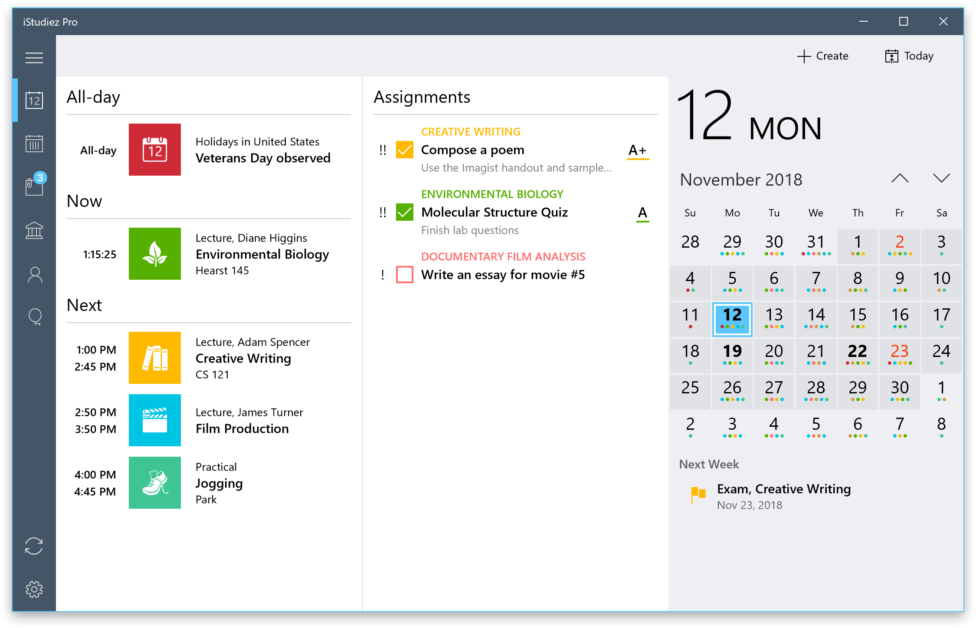
Students with ADHD forget their homework due to their poor memory. Their capacity to hold information is weak; therefore, they tend to lose track of their activities and stay disorganized the whole day.
They need help in remembering the whole homework assignment list. And homework trackers can make a huge difference.
Moreover, trackers is not only useful for listing down homework. For example, one can store and monitor other parameters like deadlines, progress charts, completion checkmarks, etc. These things make doing homework hassle-free.
Some of the best homework trackers available online for free are:
It will be more beneficial if schools can participate and extend their support. For example, the schools could launch or collaborate with trackers apps that automatically give homework information in the app to reduce the hassle of children storing homework details manually.
Homework trackers can help students:
- Feel accomplished
- Increase their productivity
- Boost confidence
- Overcome the feeling of being defeated
Timers

You often have heard “time passes too quickly” from students with ADHD. This is because they perceive time differently. They are much more in the present moment and do not understand that time is passing by. In other instances, someone with ADHD may struggle recalling when an event happened. This is referred to as time blindness.
Additionally, students with ADHD face challenges in regulating their focus, making it even more difficult.
Completing homework with time blindness and inattentiveness is hard for students with ADHD. You can use a physical or digital timer to keep track of tasks and activities. You can use different time techniques to maximize the results. The two most used techniques by students are:
- Pomodoro technique– This technique insists on working for 25 minutes and taking a
5-minute break after that. This cycle repeats four times continuously. Then, it allows a 25- to 30-minute break. - Timer blast technique- This technique offers customization as not all students can focus for 25 minutes in one go. You can set a flexible working time interval like 5 min, 10 min, 15 min, 20 min or so and take a 5 min break.
However, it is vital to use one’s break time wisely. Encourage movements during the breaks to give their mind the space they need. Do not restrict fidgeting or other movements, which studies actually found to be helpful in keeping their minds stay alert.
Some of the best timers available online for free are:
Planners
Planners are indispensable for students with and without learning disabilities. There are a lot of planner apps available online for free – you can choose according to your requirements. It’s not uncommon for students to have too much on their plate. They often find it difficult to remember everything, leading to missed deadlines and late homeworks or projects. And that is not their fault. Planners are important because they help students with ADHD avoid going back and forth for school assignments.
👉 Why use a daily planner?
A daily planner will ease the challenges of the students in completing the assignments. Here are a few ways it can help:
1. Keep track of homework and stay organized. Planners are perfect for jotting down and planning assignments. This will help students stay organized and avoid draining energy on useless tasks. The whole task is broken down into small chunks to help the students.
2. Manage time effectively. Lack of executive functioning causes problems in managing time. Planners will help students effectively manage their time. They eliminate the effort and time spent on unnecessary things like remembering, batching, planning, etc., daily for every subject.
Some of the best planners available online for free are:
Note-taking

Students with ADHD get fed up with constant low grades, which is why they do not like doing homework. They feel like their grades will stay the same no matter what they do. However, this brings their morale down.
Students with ADHD are overwhelmed by the knowledge or the information given in schools. Remembering it all seems like moving mountains. Note-taking is an ideal and strategic approach to end their constant fight with themselves for learning subjects.
Here are a few ways students can maximize their output by note making.
- The charting method
It is the most effective note-taking method. The method focuses on creating columns and tables to fill in and highlight the facts, dates, statistics, etc., by writing them down under the related fields.
- The outlining method
This method is perfect when the topic is long, and you need to have structured notes. Once you finish studying the chapter, outline the topics, sub-topics, and other key points and write down important content/information.
- The mapping method
This method works best if you are a visual learner. You highlight the main topic in the center of the page and draw arrows out of it for every piece of important information. Also, you can break down the sub-topics the same way if the main topic is long and heavy. Arrows or branches visually understand the topics, subtopics, and connected key points.
Importance of Practice – A Word from Themba Tutors
Homework may seem difficult for students with ADHD, but one can overcome the challenges through practice. Trackers, organizers, planners, notes, timers, etc., reduce the hassle for students with ADHD. The key reason for their difficulty is the lack of executive functioning. You can train your students professionally or personally to improve executive functions for better performance. We at Themba Tutors coach students with ADHD regularly – if you need our help or guidance, you can reach out to us anytime.
Check Out Our Blogs:
⏩ ADHD Homework Guide
⏩ Helping Children With ADHD Finish Their Homework
⏩ Do Kids With ADHD Rush Through Homework?
——————————–
Need help to get students with ADHD to turn in their homework?
Chat with Themba Tutors Today!
Our math tutors travel to your home.
We travel to the following locations: Manhattan, Brooklyn, Queens, Staten Island, Bronx, Long Island (Nassau & Suffolk Counties), Westchester County, Connecticut (CT),and New Jersey (NJ).
Have a free consultation today.
Call: (917) 382-8641, Text: (833) 565-2370
Email: [email protected]
(We respond to email right away!)
References:
https://impactparents.com/blog/adhd/strategies-to-make-homework-easier-for-kids-and-parents/
https://www.goodtherapy.org/blog/how-students-with-adhd-can-improve-their-study-habits-0526154
http://www.kellybear.com/TeacherArticles/TeacherTip49.html
https://www.additudemag.com/slideshows/best-homework-apps-for-your-student-with-adhd/
https://www.brainbalancecenters.com/blog/adhd-and-school-planning-for-success
https://study.com/blog/how-a-daily-planner-can-help-your-adhd-kid-stay-organized.html
https://thembatutors.com/what-is-executive-dysfunction/
https://www.knoyo.com/blog/how-using-a-planner-will-change-your-life
https://www.additudemag.com/slideshows/best-planners-for-adhd-minds/
https://www.verywellmind.com/adhd-friendly-daily-planner-tips-20902
https://www.additudemag.com/notes-on-taking-notes/#:~:text=Good%20note%2Dtaking%20habits%20for,big%20picture%20from%20insignificant%20details.
https://momsbelief.com/blog/tips-to-help-your-adhd-child-with-homework
https://www.betterup.com/blog/time-blocking#:~:text=Timeboxing%20is%20simply%20blocking%20out,by%20further%20timeboxing%20necessary%20tasks
https://blog.teamsatchel.com/5-metrics-tracking-effective-homework
https://thembatutors.com/homework-tips-for-kids-with-adhd/
https://www.educationalappstore.com/best-apps/5-best-homework-planner-apps


Craig Selinger
Latest posts by Craig Selinger (see all)
- Psychotherapy and Support Services at Cope With School NYC - April 12, 2024
- NYC Parents of Teens Support Group - April 8, 2024
- Here I Am, I Am Me: An Illustrated Guide to Mental Health - April 4, 2024
No Comments